Journal
What to expect in your first Turkish hamam
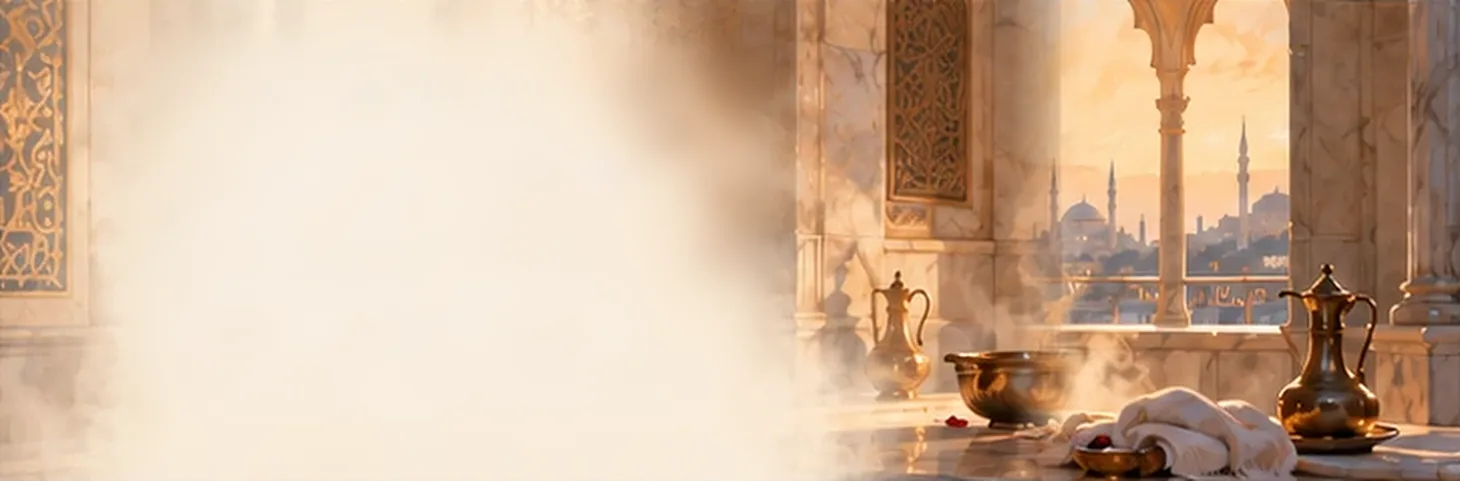
The first few minutes in a hamam are the strangest. You step out of a cool, quiet changing room into warm air and soft light, a cotton cloth around your waist, unsure where to sit or what happens next. Within half an hour that uncertainty is gone. Here is how the ritual usually unfolds.
Before you begin: the changing room
A traditional hamam starts in the camekan, the entrance hall, often a tall domed room with a fountain at its centre and small changing cabins around the edge. You will be given a peştemal, the flat-woven cotton wrap that has been used in Turkish baths for centuries. It is light, absorbent and quick to dry, which is why a thick towel has never replaced it.
You will usually find slippers waiting, too. In older times these were nalın, raised wooden clogs that kept feet off the hot, wet marble; wealthy households had pairs inlaid with mother-of-pearl. Today most hamams offer simple non-slip slippers; the floors are warm and slick, so walk slowly.
What to wear
Under the peştemal, most guests wear swimwear or a pair of disposable briefs, which many hamams provide. Women often wear a bikini or a swimsuit; in a women's section or a private room, some prefer to go without a top. There is no single rule. Keep the peştemal on in shared areas, and take off jewellery before you start: small rings are easy to lose.
Remove make-up beforehand and bring a comb and a change of underwear. Soap, the kese, towels and the peştemal are normally supplied.
Sıcaklık: the hot room
From the changing room you pass through a cooler, transitional room, the soğukluk, into the sıcaklık, the hot room. This is the heart of the hamam: a domed chamber of marble, with basins called kurna set into the walls, each fed by taps of hot and cold water. Small glass openings in the dome scatter daylight through the steam; we explain them in Istanbul's most beautiful domes.
Göbektaşı: the warm marble stone
At the centre of the hot room sits the göbektaşı, the "navel stone", a large raised platform of heated marble. Spread your peştemal on it and lie down. For the next ten to fifteen minutes your only task is to rest and let the warmth soften your skin and muscles. Whenever you feel too warm, splash yourself with water from the kurna using the shallow metal bowl, the tas. This quiet stage prepares the skin for everything that follows.
Kese: the scrub
An attendant, traditionally a tellak for men and a natır for women, will invite you to sit or lie down for the kese. A kese is a coarse mitt, used with firm, long strokes along the arms, legs, back and shoulders. You will see small grey rolls of dead skin lift away. It is surprising the first time, and entirely normal.
The pressure should feel vigorous, never painful. If it is too strong, say so; a simple "softer, please" is understood everywhere. Avoid shaving or waxing on the day of your visit, as freshly shaved skin can sting.
Köpük: clouds of foam
Next comes the moment everyone remembers. The attendant dips a cotton bag into soapy water, draws it through the air and squeezes, so that a cloud of warm foam settles over you. A gentle soap wash follows, often with a light massage of the shoulders, back and legs, and then warm water poured slowly from the tas. Hair is usually washed at the end, sitting beside a basin.
Rest: tea and quiet
After a final rinse you will be wrapped in dry cloths and led back to the cooler rooms. This is part of the ritual, not an afterthought. Lie down, sip tea, water or a cold şerbet, and let your body temperature settle. Give yourself at least twenty minutes here. Rushing straight out into the street undoes much of the calm you have just found.
How long to allow
A typical visit means around an hour of bathing, plus time to change and rest. Allow about two hours from arrival to departure so that nothing feels hurried. Eat lightly beforehand and avoid planning anything strenuous straight afterwards.
Tipping
Tipping is customary in Turkish hamams but never compulsory. If you are happy with your attendant, a modest amount in cash, handed to them directly, is the usual way to say thank you.
Health notes
The heat is gentle for most people, but please check with your doctor first if you are pregnant or have a heart condition, high or low blood pressure, or a skin condition. Skip the kese on sunburnt skin, new tattoos or recently treated areas. Drink water before and after, avoid alcohol, and step out into cooler air whenever you feel light-headed. Tell your attendant about any injury before the scrub begins.
If you would like your first hamam to be a private ritual for two, our concierge can arrange it in Istanbul, with more of Türkiye opening soon. Travelling as a couple? Read our guide to hamam etiquette for couples.
Frequently asked questions
How long does a Turkish hamam take?
Bathing usually takes about an hour. Allow around two hours in total so you can change without hurry and rest with tea afterwards.
What should I wear in a hamam?
Swimwear or disposable briefs under the peştemal, the cotton wrap the hamam provides. Slippers, towels, soap and the kese are normally supplied.
Does the kese scrub hurt?
It should feel firm and invigorating, not painful. Tell your attendant if you would like softer pressure, and avoid shaving or waxing on the same day.
Should I tip in a Turkish hamam?
Tipping is customary but optional. A modest cash tip handed directly to your attendant is the usual way to say thank you.
Plan your ritual
Our concierge arranges private hamam rituals for two in Istanbul, with Bodrum, Cappadocia and Antalya opening soon.